Get a Quote
| Night | Halt Point | Region |
|---|---|---|
| 1st Night | Guptkashi | Mandakini Valley Base |
| 2nd Night | Kedarnath Top | Rudra Himalayan Zone |
| 3rd Night | Guptkashi (Return Halt) | Mandakini Valley Base |
| 4th Night | Badrinath | Alaknanda Valley |
| 5th Night | Srinagar | Alaknanda Descent Corridor |

Do Dham Yatra by Urbania Van
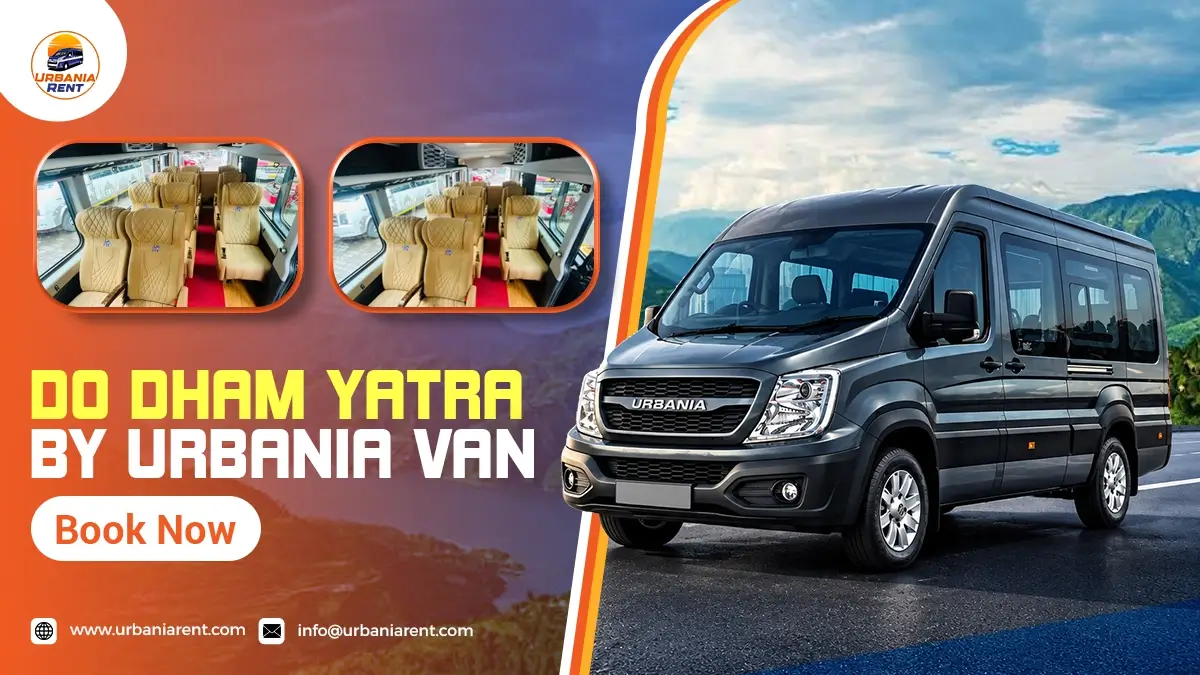
Planning a Do Dham Yatra by Urbania Van starts with picking a fleet that owns its vehicles outright, not a broker patching together mismatched cabs from different garages. Our dispatch desk in Haridwar runs on direct asset control, so every mountain-ghat permit, driver rotation, and vehicle swap decision stays inside one accountable operation instead of passing through three layers of sub-vendors.
Group organizers checking our luxury force urbania rental price per km find a flat per-kilometer figure locked before departure, with no surprise fuel escalation once the van clears Rudraprayag. For pilgrims comparing quotes across Delhi and Haridwar operators, our affordable commercial van outstation tariff covers driver batta, mountain toll, and state permit costs inside one line item, not scattered across five separate add-ons.
This operation stands as the premium luxury van rental matrix serious Do Dham group organizers use when vehicle reliability on hairpin curves matters more than a marginally cheaper quote.
Trip Highlights
- One private Urbania stays with your group for the full 5N/6D run — zero vehicle swaps, zero cabin reshuffling between overnight halts.
- Sonprayag biometric registration coordination handled by our ground desk before your group reaches the counter.
- Full-day darshan window logged at Kedarnath Top, with return descent timing built into the day plan rather than left open-ended.
- Badrinath transition routed through the Alaknanda valley corridor, cutting out unnecessary backtracking through repeat checkpoints.
- Evening temple aarti timings synced against your arrival slot at each halt point along the circuit.
- One fixed driver was assigned for the entire loop, already familiar with every hairpin stretch from Guptkashi through to Badrinath.
- Overnight halts pre-booked at Guptkashi, near the Kedarnath ridge, and at Srinagar, with confirmed room holds ahead of arrival.
- Mountain permit paperwork and toll clearance handled by our desk, not left for the group to sort out mid-route.
- Cushioned reclining seats and dual blower AC keep the cabin usable across both plains driving and altitude stretches.
Our Force Urbania Fleet
Picking the right wheelbase size decides how loose or tight the cabin feels on a drive this long, and it matters more on a mountain circuit than on flat highway runs.
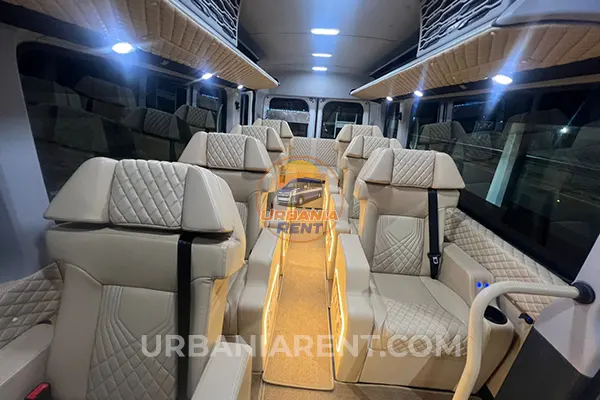
9 Seater Urbania
For a Do Dham run, the 9-seater Urbania gives families a compact, easy-to-handle cabin for the switchbacks above Sonprayag and the long mountain approach.
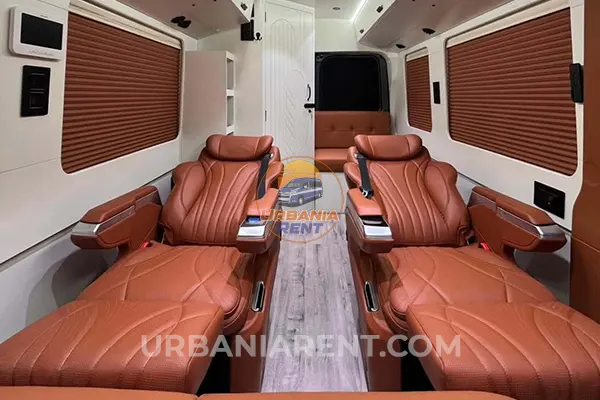
9 Seater Maharaja Urbania
The 9-seater Maharaja trim brings captain seats and extra legroom for Do Dham groups prioritizing comfort on a multi-day pilgrimage route.

12 Seater Urbania
The 12-seater Urbania works well for medium-sized pilgrimage groups, keeping every traveller together while still staying manageable on the Rudraprayag and Badrinath stretches.
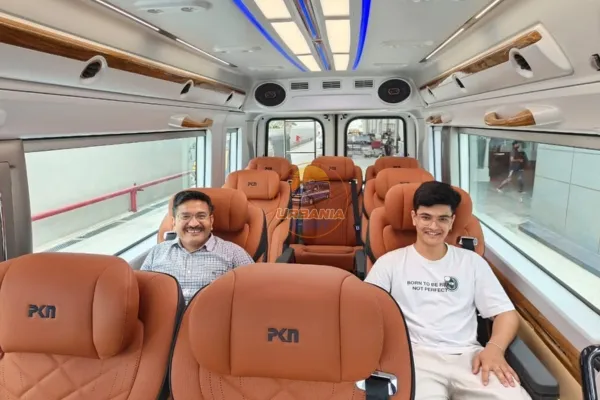
13 Seater Urbania
The 13-seater cabin gives Do Dham groups more luggage space without losing the balance needed for the hilly stretches through Joshimath and Rudraprayag.
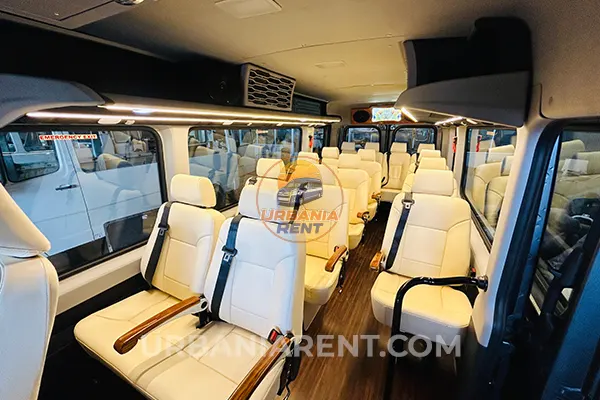
16 Seater Urbania
The 16-seater version balances capacity and comfort for larger groups carrying cold-weather gear and personal items across the full Do Dham loop.
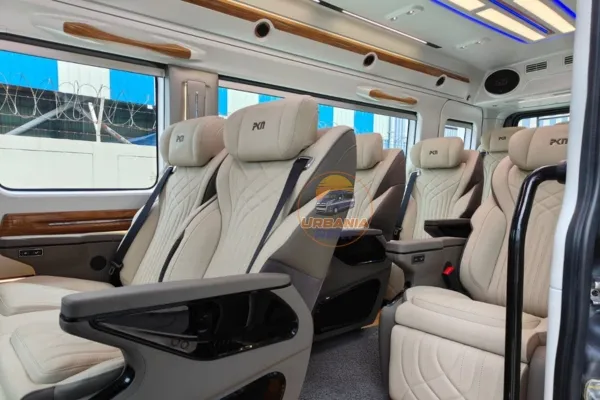
17 Seater Urbania
The 17-seater Urbania is ideal for one large family or group travelling together across the entire Do Dham route instead of splitting across two vans.
Force Urbania Rental Price for Do Dham Yatra
The complete Do Dham group tour itinerary from Delhi to Haridwar works on a fixed 5N/6D setup, and the quote you get upfront already has fuel, driver batta, mountain toll, and state permits folded in — nothing extra pops up later. Some groups fall a bit behind schedule and end up breaking the Guptkashi-Badrinath leg with a night stop at Pipalkoti or Joshimath instead of driving it straight. That's fine on our end — the dispatch desk just shifts the halt sheet around, and the base fare stays exactly what was quoted. People comparing us against customized group bus tour packages from Varanasi usually notice our per-km number holds up better once you're actually on mountain roads, where the fuel and brakes take a beating that flat highways just don't cause. Land logistics pricing for this route covers the complete 5 Nights / 6 Days circuit, structured against fixed overnight halts rather than a loose day-rate estimate.
Note
- All distances calculated from garage to garage
- Driver duty hours: 5 AM to 11 PM daily
- Payment accepted via cash, debit card, credit card, or online transfer
- Fuel is included in all standard package prices
- Toll charges, parking fees, and GST are billed separately
- Minimum 250 km per day for outstation bookings
- Extra hours beyond duty time: ₹500 per hour
Do Dham Yatra by Urbania: Places to Visit in 5 Nights 6 Days
Day 1: Haridwar Arrival & Scenic Mountain Highway Run to Guptkashi (Mandakini Valley Base)
Your Urbania leaves Haridwar early, well before the sun's fully up. From there it's straight onto the Rishikesh-Rudraprayag road, and slowly the terrain starts climbing into Mandakini valley territory. We don't stop at fixed times for meals — whenever the group's hungry, that's when the driver pulls over. Works out better that way, and you still land in Guptkashi by evening, no mad rush for the last stretch. Check-in at the base lodge closes the day, with the driver briefing the group on next morning's ascent logistics.
Day 2: Guptkashi to Kedarnath Top — The Intense 16 km Spiritual Ascent
Depending on where the road-head currently stands, the van drops everyone at Gaurikund or Sonprayag — from there it's a trek or pony for the climb up to Kedarnath. That's a solid sixteen kilometers of altitude gain before you hit the temple ridge. Our guy on the ground handles the porter and helicopter slot bookings beforehand, so that's sorted well before you even reach the road-head. Evening settles the group into ridge-side stay options near the shrine.
Day 3: Morning Darshan, Downhill Trek and Downhill Return to Guptkashi Base
Darshan happens early at Kedarnath, before the descent starts — that timing's deliberate, it keeps you ahead of the midday crowd on the narrower parts of the trail. Coming down is a lot quicker than the climb up, obviously. Van's already waiting at the road-head, and by evening you're back in Guptkashi. This halt repeats the base lodge from night one, cutting down on new check-in friction.
Day 4: Guptkashi to Badrinath Dham (Alaknanda Valley Base) — Fourth Dham Arrival
The route shifts valleys entirely here, tracking out of the Mandakini basin and into Alaknanda territory through Rudraprayag and Chamoli. Road conditions past Joshimath narrow considerably, and the driver adjusts cruising speed against landslide-prone patches rather than holding a fixed average. Arrival at Badrinath closes out the fourth dham leg of the circuit.
Day 5: Morning Badrinath Darshan, Mana Border Tracking, and Return to Srinagar
Morning temple hours at Badrinath run ahead of the group's departure window, followed by a short run out to Mana village near the India-Tibet border zone for those tracking the Saraswati river source point. The van then reverses direction down the Alaknanda corridor, covering the descent to Srinagar before nightfall.
Day 6: Srinagar to Haridwar Drop — Final Downhill Return Logistics
The final leg retraces the highway stretch back through Rudraprayag and Rishikesh, closing the loop at Haridwar by evening. Luggage handoff and final billing reconciliation happen at the drop point, with the group's contract closing once the vehicle clears its last odometer log.
Best Time to For the Do Dham Yatra
May to June (Peak Summer Window): Best road conditions you'll get all year, temples fully open, no restrictions. The problem is, everyone wants to travel in this window. Book late and you're stuck waiting for a vehicle, or paying more for one.
July to September (Monsoon Risk Zone): Rudraprayag and Joshimath stretches turn risky once the rains hit properly. Short closures happen, sometimes with barely any warning. If you're set on traveling now, just plan extra days into the trip. You'll thank yourself later.
October to Early November (Autumn Closing Window): Honestly one of the better windows. The weather turns cool, the shrines aren't packed, roads hold up fine. This is right before everything shuts down for winter, so it's kind of the last good stretch.
Late November Onward — Gates close for the season; vehicle circuits shift toward the winter deity relocation points instead of the main shrines.
Things to Do in Do Dham Yatra
- Kedarnath shrine darshan and a slow walk around the temple ridge courtyard.
- Mana village is near the India-Tibet border, including the Saraswati river source point.
- Vasudhara Falls is a short trek from Mana, for groups with an extra half-day buffer built in.
- Tapt Kund hot spring dip at Badrinath before the morning darshan queue builds up.
- Roadside viewpoints along the Alaknanda and Mandakini valleys for photography stops en route.
- Local Garhwali food halts at Guptkashi and Srinagar dhabas along the highway stretch.
Features and Facilities of a Premium Urbania Van
Monocoque Chassis Build — A single-shell structure reduces cabin flex on repeated hairpin turns, keeping passenger space steady even on rough ghat surfaces.
Dual Blower AC — Front and rear blower units keep airflow even across all rows, useful once the van climbs past the tree line into thinner, cooler air.
Row-Wise USB Docks — Charging points are fitted at every row instead of just the front cabin, so devices stay powered through the full day's drive.
Individual Reading Lamps — Each seat gets its own overhead lamp, useful for early morning departures before sunrise.
Sealed Wide Windows — Noise isolation improves noticeably over older builds, cutting down road and wind noise on long highway stretches.
Cushioned Seats and Legroom — The cushioned seats and legroom spacing on our Urbania trim run wider than standard minibus rows, a core piece of the overall safety and comfort features of Tempo Traveller-class vehicles operating this circuit.
Why Choose Our Luxury Van Hire Services?
- Direct fleet ownership means every van on this circuit is company-registered, not subleased mid-route from another operator when demand spikes during peak weeks.
- Certified mountain permit clearances travel with each driver, covering verified hill-route licenses and updated ghat road permits before departure, so paperwork never becomes a mid-trip holdup.
- Billing stays transparent throughout, with the quoted per-km rate, driver batta, and toll charges appearing as separate line items instead of folding into one vague total.
- A 24/7 centralized depot in Haridwar keeps a standby vehicle ready for rapid replacement if a van faces a mechanical issue anywhere along the circuit.
How to Book a Force Urbania Van Online for Do Dham Yatra
Booking one of our Urbania vans for the Do Dham circuit isn't complicated. Tell us your group size, when you want to travel, and which wheelbase suits you, and you'll have a per-km quote back within a day. Confirm your slot with an advance, send over traveler IDs for the permit paperwork, and once the mountain permits clear, we assign your driver and vehicle. Pickup details land in your hands 24 hours before you leave Haridwar — that's pretty much the whole process.
- Share your group size, preferred travel dates, and wheelbase preference with our booking desk.
- Receive a per-km quotation covering the full 5N/6D circuit within one business day.
- Confirm your slot with an advance payment and share traveler ID details for permit processing.
- Get your assigned driver and vehicle profile once the mountain permits clear.
- Receive final dispatch confirmation and pickup details 24 hours before departure from Haridwar.
Need Help?
Have any Questions About Us?
Get in touch with our team for any queries, bookings, or support. We're here to help you 24/7!




FAQ
Wait times at the Sonprayag shuttle counter stretch past two hours during the peak May-June rush, especially on weekends when biometric registration queues stack up alongside vehicle shuttle slots. Our ground coordinator pre-registers group documents a day ahead, cutting the on-spot wait closer to 40-45 minutes.
Light rain, and private vans still make the Joshimath-Badrinath run without much trouble. But the moment there's an active landslide warning or the rain won't let up, district administration shuts that route down completely — no exceptions. Our dispatch desk checks the daily road-clearance bulletin before anything moves, and if it's not confirmed clearly, departure just waits. Better that than stranding a van mid-route.
If you've got elderly travelers needing a porter or pony, get that booked three to four days out at minimum during peak season. Slots fill up fast once the daily quota hits at the Gaurikund counter, and there's no fixing that once it's gone. For anyone who can't manage the trek at all, doli teams need even more lead time. A week out is the safer bet there.
Every traveler's yatra pass gets scanned against a biometric photo and ID match at the Sonprayag checkpoint before shuttle boarding, run jointly by state police and tourism department staff. Passes issued without a matching photo ID on file get flagged for manual verification, which adds delay, so our desk checks document consistency before the group even departs Haridwar.
Our drivers don't wait for a warning light to check coolant — it gets checked at every major halt, scheduled, no exceptions. Makes sense given how much load those hairpin climbs put on the engine compared to a normal highway run. Same logic with the brakes. After a day that's heavy on descents, the lining gets inspected, and pads get swapped out before they're actually worn through, not after.
Most ridge-side lodges near the Kedarnath shrine offer basic locked storage for non-essential luggage, letting travelers carry only a light daypack for the final ascent stretch. Heavier bags typically stay with the van at the road-head in Sonprayag or Gaurikund instead, retrieved once the group descends.
Centralized heating isn't really a thing at those high-altitude stays near Kedarnath or Badrinath — you're looking at basic electric heaters, or sometimes just a bukhari wood-stove doing the job. And when the power backup kicks in during a grid outage, it's only running the lights, nothing more. Room heating's not part of that deal. Groups traveling in the shoulder season around late October should carry personal thermal layers regardless of the lodge's stated heating setup.
Since the van, driver, and mountain permits sit under one owning company rather than a chain of subcontracted operators, there's no added margin layer stacking onto the quoted per-km rate mid-route. This keeps the fare fixed even when a route stretch runs slower than planned because of traffic or road repair work.
Signal gets patchy past Sonprayag, and by the time you're up on the Kedarnath ridge, most networks are down to spotty 2G — near the shrine itself, don't expect any service at all. GPS logs don't just vanish though, they get cached right on the vehicle unit and sync back automatically once the van's back in range, usually somewhere around Guptkashi or Rudraprayag.